

In a way our climate is a bit like a checkbook; deposits are made into an account, and then some are dispensed from that account. But in the last 200 years or so, we are depositing more into our climate checkbook and dispensing less.
See two images of Earth from World Meteorological Organization [WMO] 2025 report, “State of The Global Climate.” [CleanTechnica 4/5/26.]
This is basically a Climate 101 review.
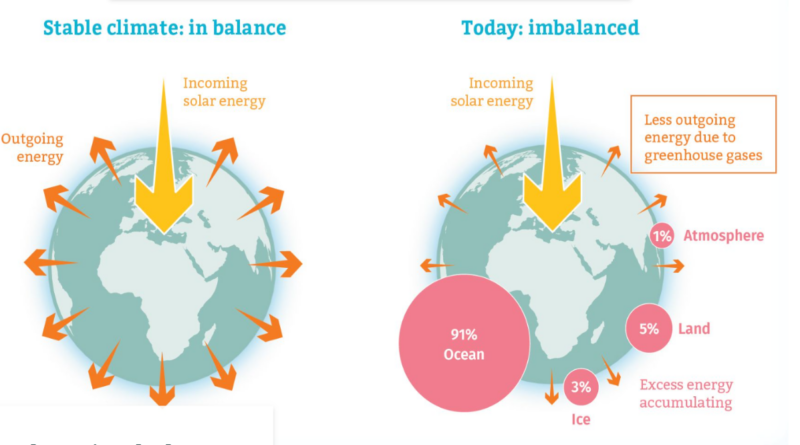
See planet image on the left.
Incoming solar energy [bright yellow arrow] from our Sun enters Earth’s atmosphere and some remains in or on the planet’s surface. Some[see red arrows in image]energy also radiates back out to space. For many millennia, about 10,000 years, these incoming and outgoing units of energy have kept our planet’s climate remarkable constant; “in balance” so to speak.
During this period called the Holocene, the composition of the main components of Earth’s atmosphere changed very little. This information is based on the analysis of gas bubbles trapped in the ice obtained from glaciers and ice sheets in both Antarctica and Greenland. The main components, nitrogen [~78%] and oxygen [~21%] have remained remarkably constant during this time. Several other trace gases are present and are also constant, including carbon dioxide [CO2], argon, neon, helium, and others.[Wikipedia].
During the Holocene, the temperature and Earth’s climate have been very stable. The amount of CO2 in the atmosphere varied hardly at all. It was about 275 parts per million[ppm]or 0.0275%. … Civilization flourished.” [Bill McKibben interview, Dec. 10, 2009.] Today CO2 is at 425 ppm [0.0425%], for a 50% increase in its concentration.
This gas has an interesting property inherent in the molecule itself. It reduces the amount of infra-red energy normally emitted to space and returns it to Earth. Bill McKibben has said, “it is just simple physics and chemistry,” that is just what it does. It is not bad, or good, it is just a property of those three atoms in that molecule containing two oxygens and one carbon.
See right hand image [Today: Imbalanced] of our planet.
The impact of this imbalance according to UN Secretary General Antonio Guterres, is that “Our planet is trapping heat faster than it can shed it.” Most of this heat resides in the Oceans [91%] with lessor amounts in the Atmosphere [1%], Land [5%] and Ice [3%].
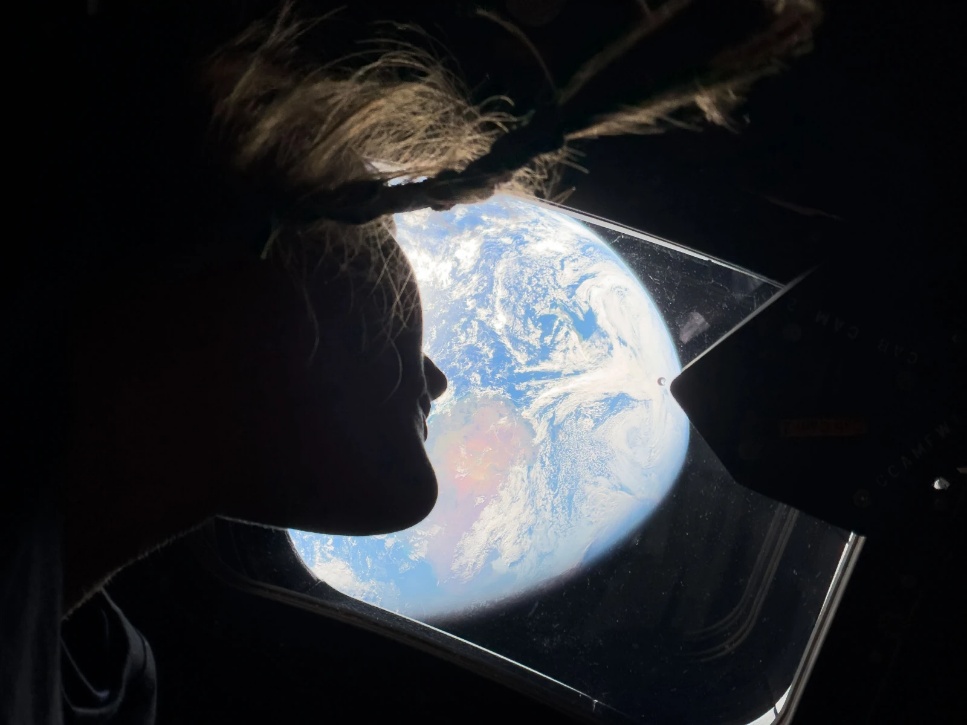
Let us look at a ‘real photo’ of Earth just released by NASA via AP. It shows astronaut and Artemis II mission specialist Christina Koch looking out the window of the Orion spacecraft, on the way to the moon, at planet Earth on April 2, 2026. The swirling clouds, partially visible land mass bring to a focus, our home, and the thin layer of atmosphere around it.
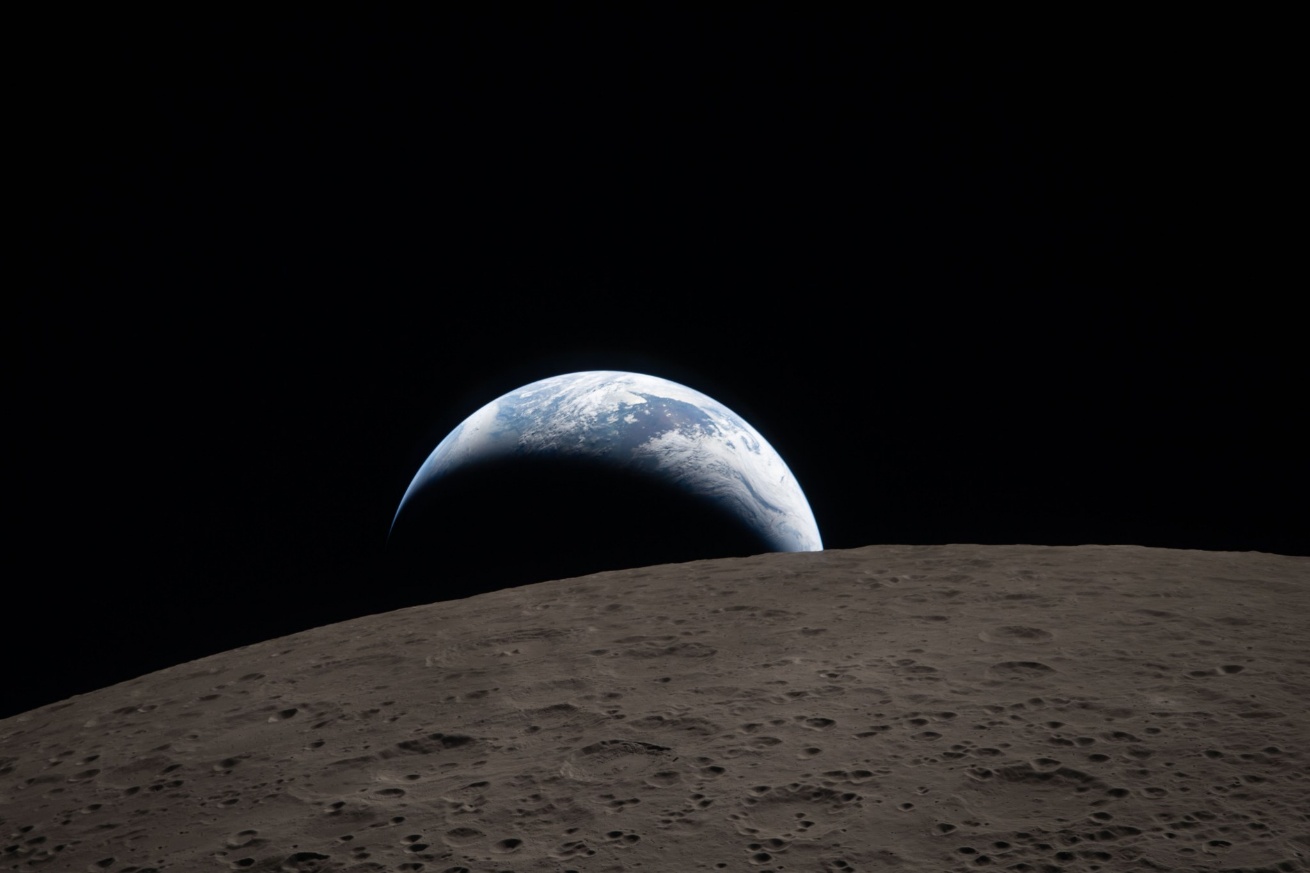
In 1968, Earth’s inhabitants were treated to “Earthrise”, a classic and historical photo taken by astronaut Bill Anders of the Apollo 8 crew as they flew around the Moon. On April 6, 2026, 58 years later, we are all treated to another amazing view of Earth as Artemis II circled the moon, “Earthset.” See image from NASA here of Earth with the Moon in the foreground.
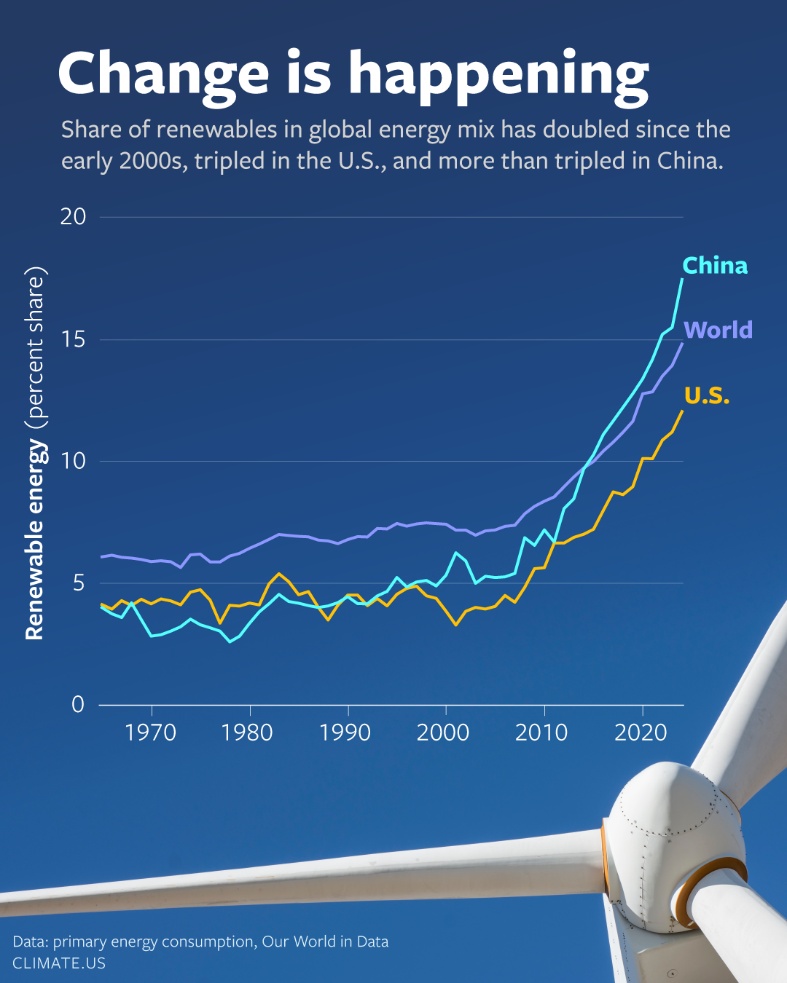
Many initiatives with renewable energy are happening to address this heat imbalance caused by the combustion of fossil fuels.
See the graph/image titled, “Change is happening” from Our World in Data on the site Climate. US. The graph covers the past fifty plus years and shows the recent strong rise of renewables for China, World, and the U.S. The units along the vertical axis are in per cent share of total Renewable energy. The growth is obvious and encouraging.
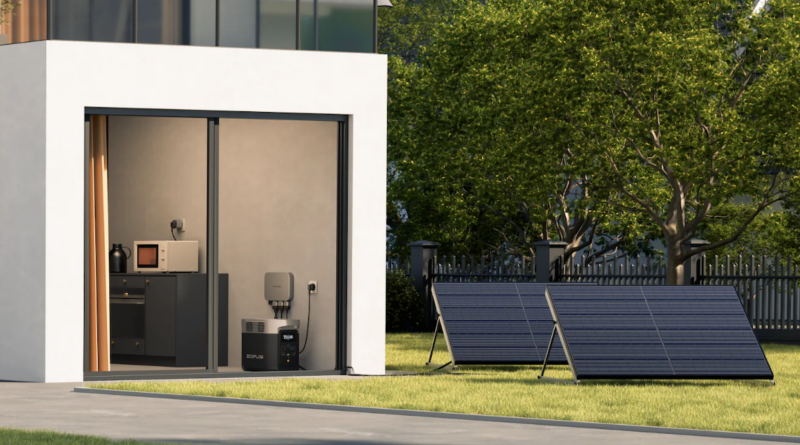
One new concept catching on in the U.S. now is called “balcony solar.” This topic was first covered here some months ago with information from Germany and how well it was being accepted and had about one million users there.
See photo [image provided by EcoFlow] of these flexible photovoltaic panels in the backyard but they can be placed anywhere sunlight is available. They plug in to a normal home outlet and feed electricity directly into the home, reducing the power required from the outside grid. Utah was the first to pass a “balcony solar” bill in 2025. Some twenty-seven other states and D.C. are also considering plug-in bills.
Bits and Pieces:
— “But man is a part of nature, and his war against nature is inevitably a war against himself.” Rachel Carson. Preface, “Finding the Mother Tree,” 2021, by Suzanne Simard.
— “There is enough carbon in the ground to really cook us.” Steven Chu, a Nobel Prize-winning physicist, former Energy Secretary in Pres. Obama’s cabinet. “Life on A Little-Known Planet” by Elizabeth Kolbert, 2025, p 239.
— Anegawatt, a term used by Amory Lovins, retired, former director of the Rocky Mountain Institute [RMI] “is a watt of electricity that does not have to be generated because an energy-saving measure has obviated the need for it.” Life On a Little-Known Planet” by Elizabeth Kolbert, 2025, p 267.
— – Zillow has quietly removed a feature from its site that showed the risks from extreme weather for more than one million home sale listings after complaints it harms sales. NY Times 12/1/2025.
—New U. S. electric generating capacity expected to reach a record high in 2026. U. S. Energy Information Administration.
— Country’s biggest solar project is moving ahead in California. It will be installed on farmland that has to lie fallow as the state restricts over- pumping the aquifers they previously used to irrigate crops. The project will cover 200 square miles and produce 20,000 megawatts of electricity – as much as a dozen or more big power plants burning coal or gas. npr.org February 24, 2026.
And so it goes.
The scientific career of Raymond N. Johnson, Ph.D., spanned 30 years in research and development as an organic/analytical chemist. He is currently founder and director of the Institute of Climate Studies USA (www.ICSUSA.org). Climate Science is published monthly.
Sources
- CleanTechnica, 5 April 2026
- Bill McKibben interview, 10 December 2009
- UN Secretary General Antonio Guterres
- World Meteorological Organization
Images: EcoFlow.