

Data show that the Arctic is warming at 2x-3x the rate of the rest of the planet. Increased snow melt on land and loss of sea ice, means more of sun’s energy is absorbed in the water and on the land. The tree line is moving north, and beavers are now seen in areas that they have never been seen before. All of this and more is having a profound impact on the ecology of the region.
The permafrost is melting.
And there is some chemistry happening too, now that certain elements and materials have been released from the icy grip of the permafrost.
We may have to change this image in our minds of pristine, clear Arctic rivers. Rivers filled with pink salmon, chum, char and wildlife, especially bears, feeding on the bounty. But change is underway.
Note the photo of the twisting Salmon River in its valley taken by Ray Koleser in September 2020. The river is about 70 miles long and is nestled in between mountains and hills on both sides. The author, John McPhee wrote in 1977 that it had “the clearest, purest water I have ever seen.”
Note the color of the river a few years ago.
This wilderness river now has a yellow-orange color to it. There are no mines, towns or industries nearby. And, it is not just this river. So, what is going on?
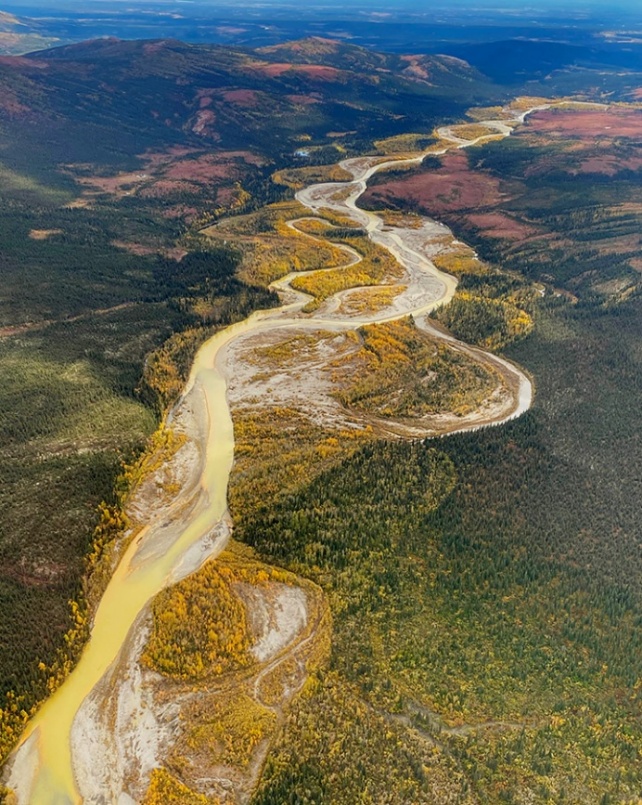
In a recent count, some 200 plus rivers in Alaska and the Canadian Arctic are experiencing a similar color change.
Note a second photo taken in 2023 by Roman Dial, of the Ecologist Patrick Sullivan wearing a blue parka, from Alaska Pacific University. He studies acid seeps like the one in front of him in Alaska’s Kobuk Valley National Park.
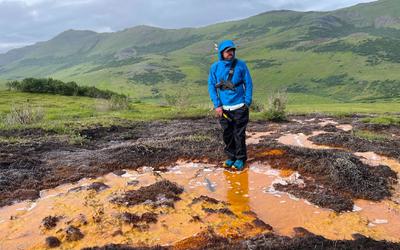
Research is beginning to shed some light on what is going on.
The Financial Times website has an image or cartoon of what appears to be happening.
The title is “How permafrost thaw is causing metals to leach into rivers.”
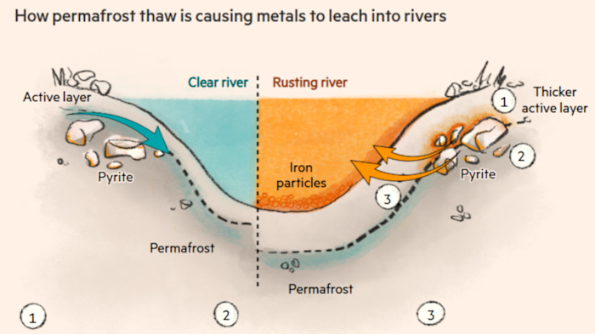
The left portion shows a “Clear river”, a thin “Active layer” and below the dotted line, “Permafrost”. By Active it means it thaws in the warm season and then freezes again in winter. Pyrite, made of iron and sulfur, along with other metals are held in place by the frozen ground.
Now let’s look at the right side of this same image. It shows a “Rusting river” containing “Iron particles” and a “Thicker active layer.” Now notice that the permafrost has receded deeper and is freeing up “Pyrite” and other materials (rocks) making them available to liquid water, oxygen and microbial action. The chemical and biological reactions that can now occur (weathering) bring about huge changes in the chemistry of the water column. What we do know “is that the chemistry behind this rusting is linked to the climate-induced thawing of the permafrost.” [Yale Environment 360, Ed Struzik, April 16, 2026].
The remoteness of these areas make it a challenge, an expensive one, to visit and collect water samples and analyze them on a regular basis. What the data show is that about 22 metals (elements) have been mobilized into the streams and rivers that include iron, aluminum, cadmium, copper, nickel, zinc [Science News, 8 Sep 2025, Warren Cornwall] with some at highly toxic levels. In addition, the acidity in some rivers has dropped to a pH of 2.3, comparable to the acidity of vinegar [Yale Environment 360, Ed Struzik, April 16, 2026.]
And, all of this is happening in a federally protected area, remote from oil drilling and people. This vast wilderness area is afforded the highest level of environmental protection and yet it is being degraded by our addiction to fossil fuels thousands of miles away.
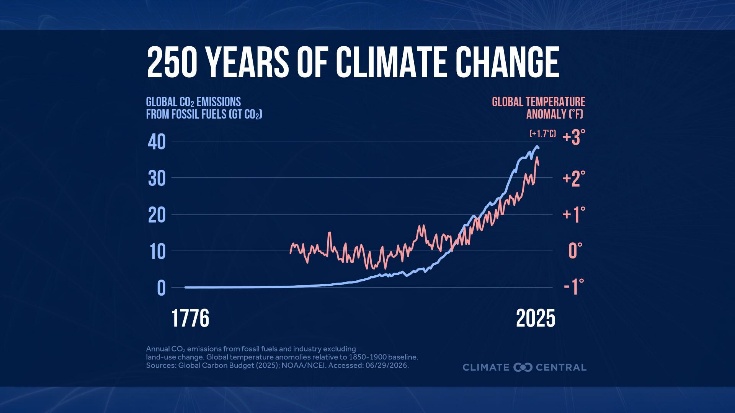
As we celebrate the 250th anniversary of our democracy it is interesting to visit the chart, “250 Years of Climate Change” from Climate Central. The solid blue line traces global emissions of carbon dioxide from fossil fuels over this time period. Alongside this line and closely following it is the planet’s increase in temperature during this same time period. The connection is unavoidable. The more carbon dioxide in the atmosphere the higher the increase in atmospheric temperature.
It is us.
And, so it goes.
The scientific career of Raymond N. Johnson, Ph.D., spanned 30 years in research and development as an organic/analytical chemist. He is currently founder and director of the Institute of Climate Studies USA (www.ICSUSA.org). Climate Science is published monthly.
Sources
- Yale Environment 360, 16 April 2026 — Ed Struzik
- Science News, 8 September 2025 — Warren Cornwall