

Neodymium. Dysprosium. Samarium. Yttrium. Praseodymium. Gadolinium.
OK, this is not a test, you don’t have to really try and pronounce these names.
These words are not characters from a Balkan or Gothic mystery novel or story. These are actual elements, like oxygen or hydrogen or carbon, found in the crust of our planet in relatively small amounts. These elements are just a few of the several Rare Earth Elements [REE] that are having an out-sized impact on technologies of importance today and have become indispensable metals in electronics manufacturing.
The scarcity of these elements has made them essential components in global trade. They are utilized in a wide array of technologies, including mobile phones, wind turbines, photovoltaic inverters, electric vehicle batteries, television displays, drones, military weaponry, missiles, computer chips, as well as permanent magnets found in computer hard drives and various other advanced systems.
Over the past two decades China has perfected the technologies to source and, more importantly, purify these elements. U. S. gets 70% of its supply from China. This technological dominance has caused trade tensions that are still being resolved.
Refined production of rare earth materials in 2023

See the horizontal bar chart from the International Energy Agency [IEA] titled, “Refined production of rare earth materials in 2023. ” Units are in % of global total with China supplying over 90% of the total.
So, what does all this mean?
What is the connection between climate, renewable energy and rare earth metals ?
The connection is the fact that Earth’s temperature is rising, and at a faster rate, due to our huge carbon dioxide emissions into the atmosphere. In the past century and a half our planet has been warming with recent years setting records almost annually. See the horizontal lines in the graph prepared by Berkeley Earth showing that September 2025 was the third warmest September in more than 150 years.
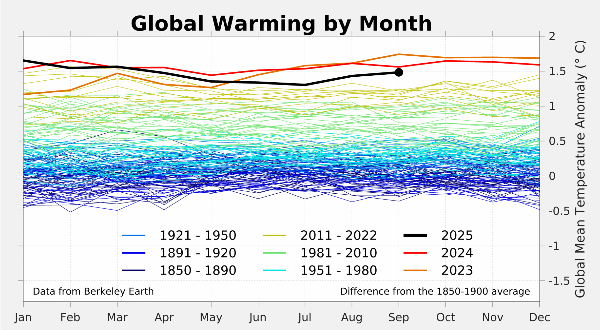
The graph shows lines for each year over this period[1850 -2025]. In the early years of this data set, the blue cooler lines appear near the bottom, providing a contrast with the more recent warmer yellow and red lines[years]positioned at the top.
The solution is straight forward. We must stop consuming fossil fuels and releasing more CO2 into the atmosphere than the Earth can sequester in the oceans and the land sinks[trees, soil]. We must move to renewable forms of energy: solar, wind, geothermal, hydro. There is continuing debate about the size of, and the possible role of nuclear energy, but its high cost is a concern as well as what to do with the leftover radioactive residue, some of which will last tens of thousands of years.
And, many of these REE are used in renewables. The current administration in the U. S. is shunning renewables and the REEs needed there. It is not clear if, or why, the U. S. is not prioritizing and developing the technical capabilities and capacity in producing these purified REEs. Instead, we are investing in more coal, oil and gas for energy production while other countries are moving towards renewables with China racing ahead.
Our president said that China exports wind turbines but doesn’t have any itself, is pure fiction. This is what one would call misinformation, disinformation or ….
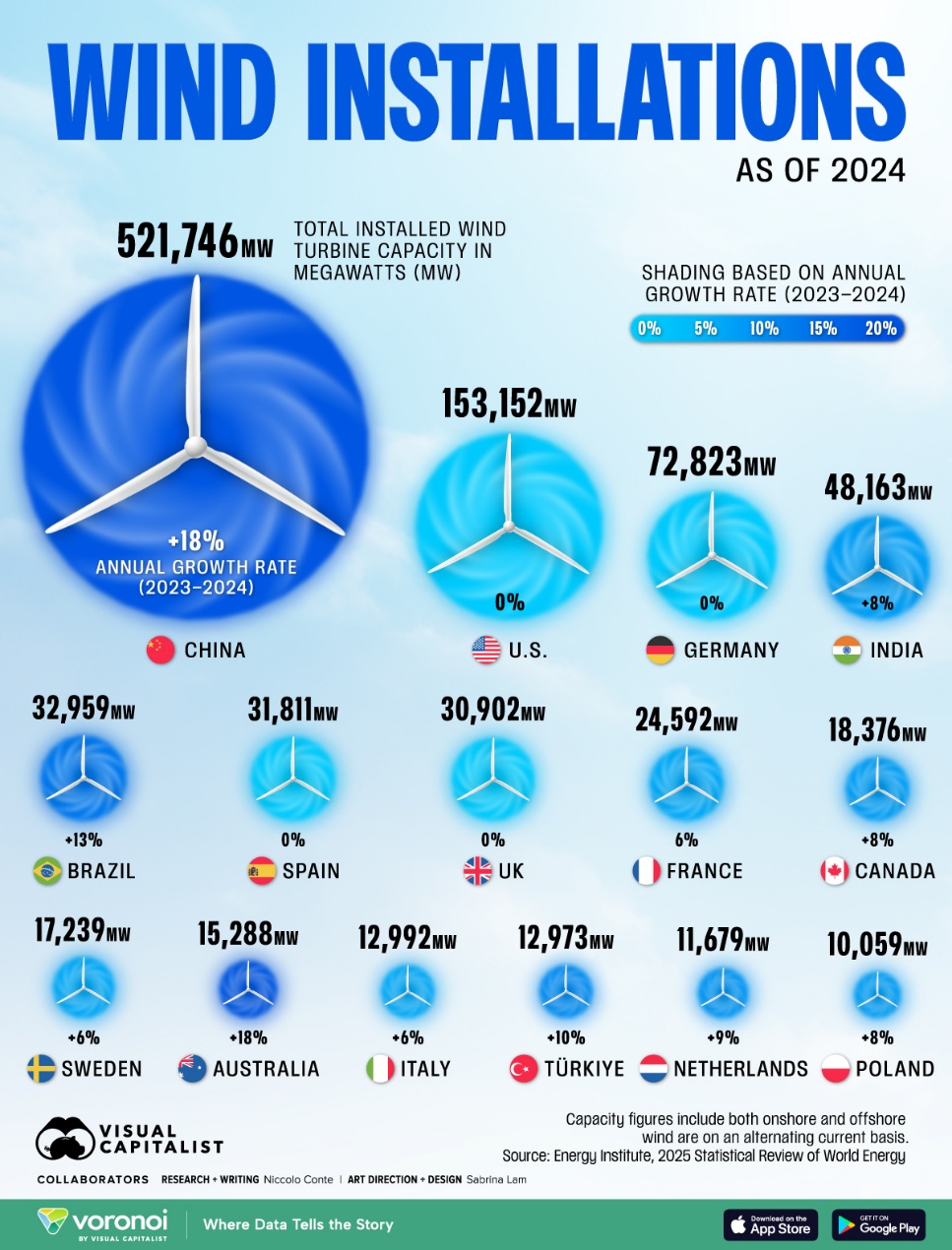
China has installed about 100,000 wind turbines[estimate]. In the U. S. , Texas is the leader with about 19,000 turbines installed, more than the next three states combined.
See the illustration titled, “Wind Installations, as of 2024” courtesy of “Visual Capital and Voronoi. ” The size of the circles reflects the installed wind turbine capacity in megawatts[MW]for each of the 15 countries listed with China clearly the leader with 521,746 MW installed. The shading in these circles also reflects the annual growth rate. The darker the blue the larger the annual growth rates.
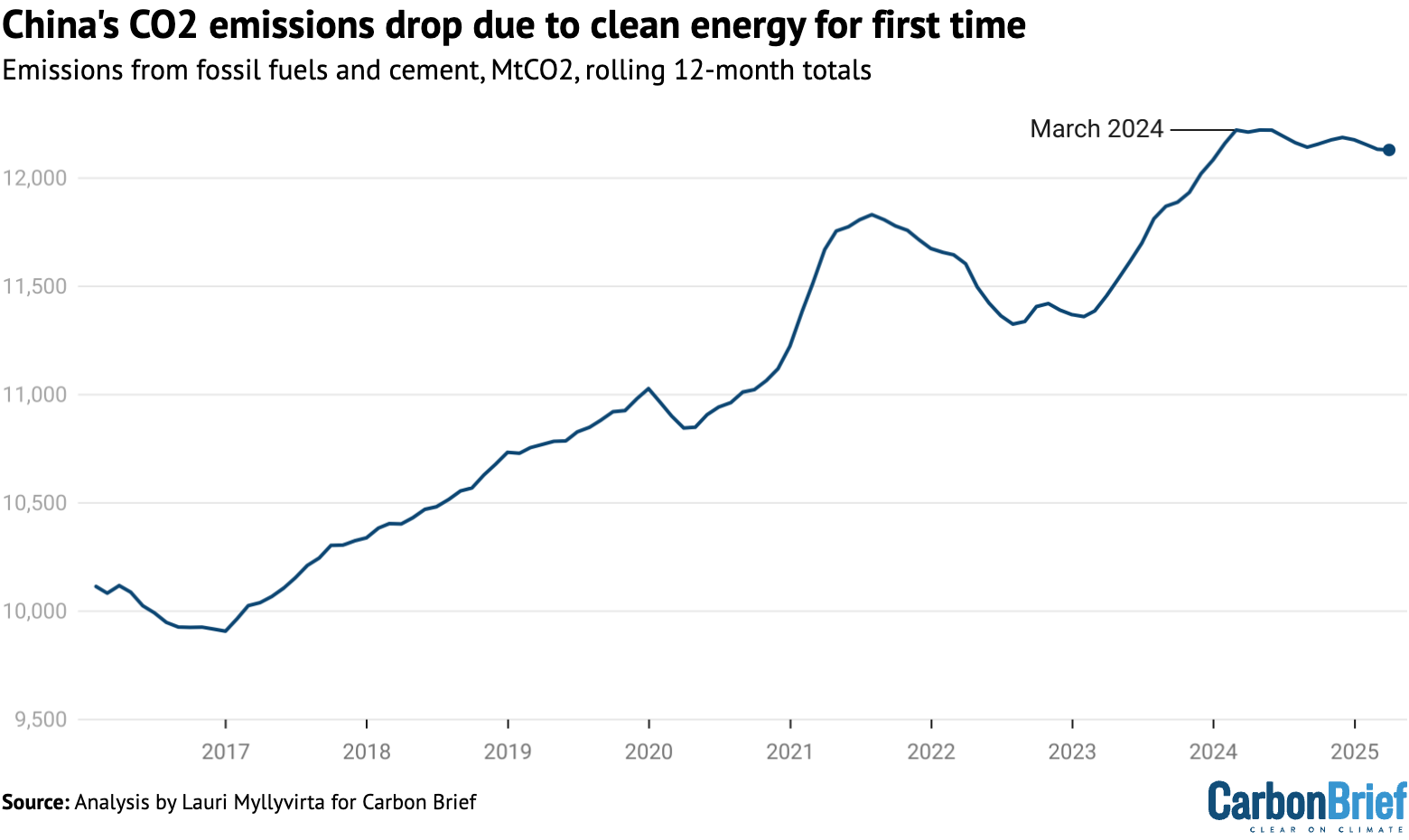
The net result of China’s rapid build-out of wind and solar, and even with the second largest economy on the planet, they have bent their CO2 emission curve down, many years ahead of schedule.
See graph from Carbon Brief titled, “China’s CO2 emissions drop due to clean energy for first time. ” While their emissions are still enormous, bending the curve downward is afeat and reflection of their renewable energy policies. The benefits to our planet are, and will be, enormous.
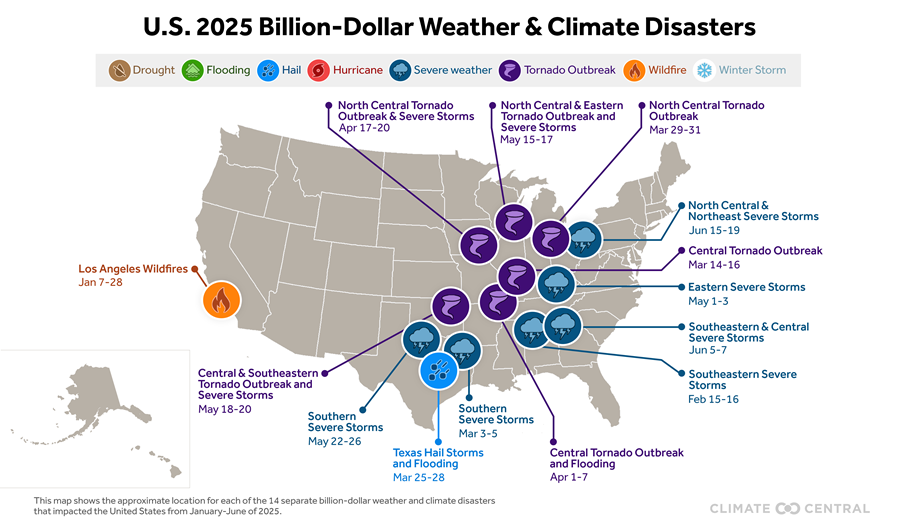
Meanwhile, the impact on human lives, and the associated costs of these events, accumulates. Research shows that extreme weather events have intensified and, in some cases, increased in frequency. This year our government has taken the position to stop collecting data on the frequency and damages incurred by these extreme events. However, an independent organization, Climate Central, has stepped into the breech to save the data and continues to collect and publish new data.
See map of U. S. from Climate Central titled “U. S. 2025 billion-Dollar Weather & Climate Disasters. ” The map shows the 14 separate billion dollars and more events, from January through June 2025. The total costs are over $100 billion. Climate change is costing us lives and property damage in significant ways.
Some tidbits:
- According to Bloomberg news, the Hue and Da Nang area in Vietnam received over 5 feet[!! !]of rain in 24 hours.
- David Gelles, writes in an article in the New York Times[October 9, 2025], that King Edward I of England in 1306 prohibited the burning of coal in London. The smoke was leading to pollution, health problems, and social unrest.
- France is planning a giant 1. 5-gigawatt wind farm off its coast. It will be its largest clean energy power plant project and Total Energies, a fossil fuel giant, will be the lead contractor.
And so, it goes.
The scientific career of Raymond N. Johnson, Ph.D., spanned 30 years in research and development as an organic/analytical chemist. He is currently founder and director of the Institute of Climate Studies USA (www.ICSUSA.org). Climate Science is published monthly.
Sources
- New York Times, 9 October 2025
- Bloomberg
- International Energy Agency