

The United Arab Emirates [UAE] Is sitting on an enormous pool of oil. They are also selling this oil to the market and making enormous amounts of money. However, they are also investing big money in renewables and have a goal of meeting 35% of their energy needs by solar, battery storage, and nuclear by 2030-31. And, it is on a path to meet that goal.
We have all seen photos of photovoltaic [PV] panel installations but this photo of an array of panels stretching into the distance as far as the eye can see is impressive. The article was written by Will Norman and image supplied by Masdar [PVTech, September 3, 2026].
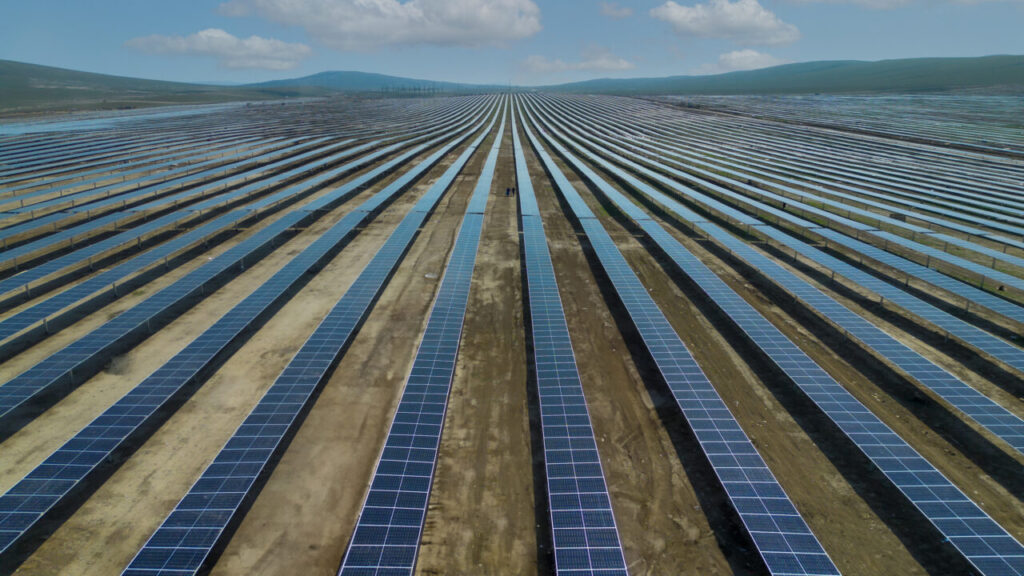
The UAE is building this 24-hour or “round the clock” renewable energy project consisting of PV with battery storage project in the desert. The 5.2 GW, 19 GWh [gigawatt-hour] solar plus storage system has a price tag of $6.1 billion. Construction began almost exactly a year ago.
This arrangement, coupling PV with batteries, makes this solar project a 24-hour energy source. It will produce electricity for the grid during the day, as well as providing energy to the battery system that will release it to the grid as needed, after the sun goes down. Who says that solar energy can only be available during the day?
And, this is only one of several solar-storage projects in the UAE pipeline. According to Wood Mackenzie, an energy analyst company, the Middle East region had the lowest levelized cost of energy [LCOE] for solar PV in 2025 [except for China] dropping far below that of gas or oil or wind and as low as US$37/MWh [megawatt hour].
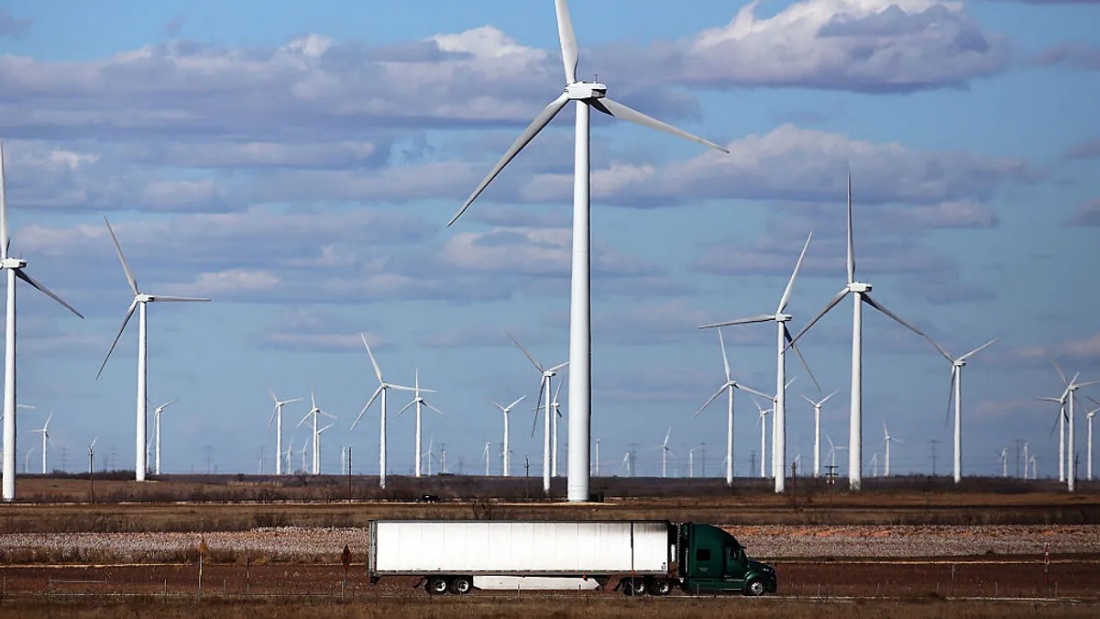
This renewable energy push includes onshore wind as well. See the photo of a truck passing in front of wind turbines at a wind farm in Colorado City, Texas. [Spencer Platt via Getty Images]. Overall Texas leads the nation, by far, in the installation of wind energy.
In the U.S. land-based wind capacity increased by 5 GW in the second quarter 2026 [American Clean Power Association Sept. 3, 2026]. The administration is putting roadblocks in the way of up to 44 GW of additional wind projects that are “stuck” in a review by the Department of Defense. A judge has ruled in favor of restarting those reviews, but their status is not known.
Let us turn now to an upcoming new trend and idea that is called VPP [virtual power plant].
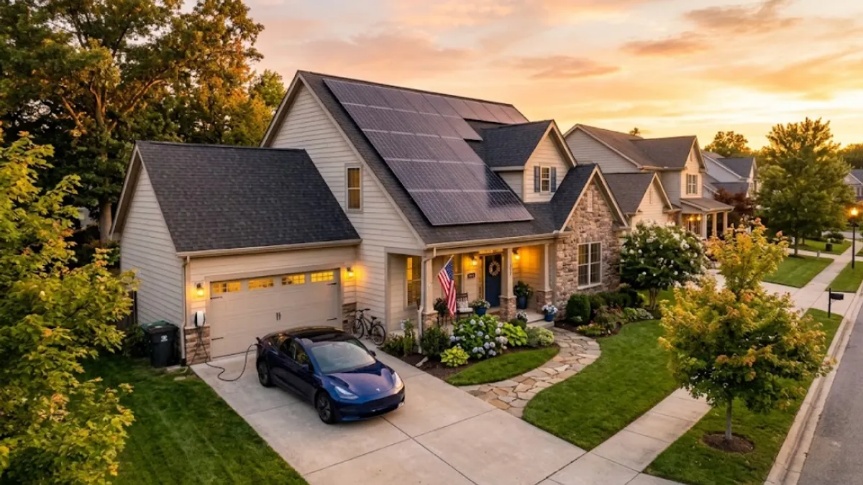
Look at the photo [courtesy of ev.energy] of a home with solar panels on the roof, an electric vehicle [EV] in the driveway and perhaps a storage battery in the garage. There are major benefits here for the power companies as they have developed bidirectional charging software.
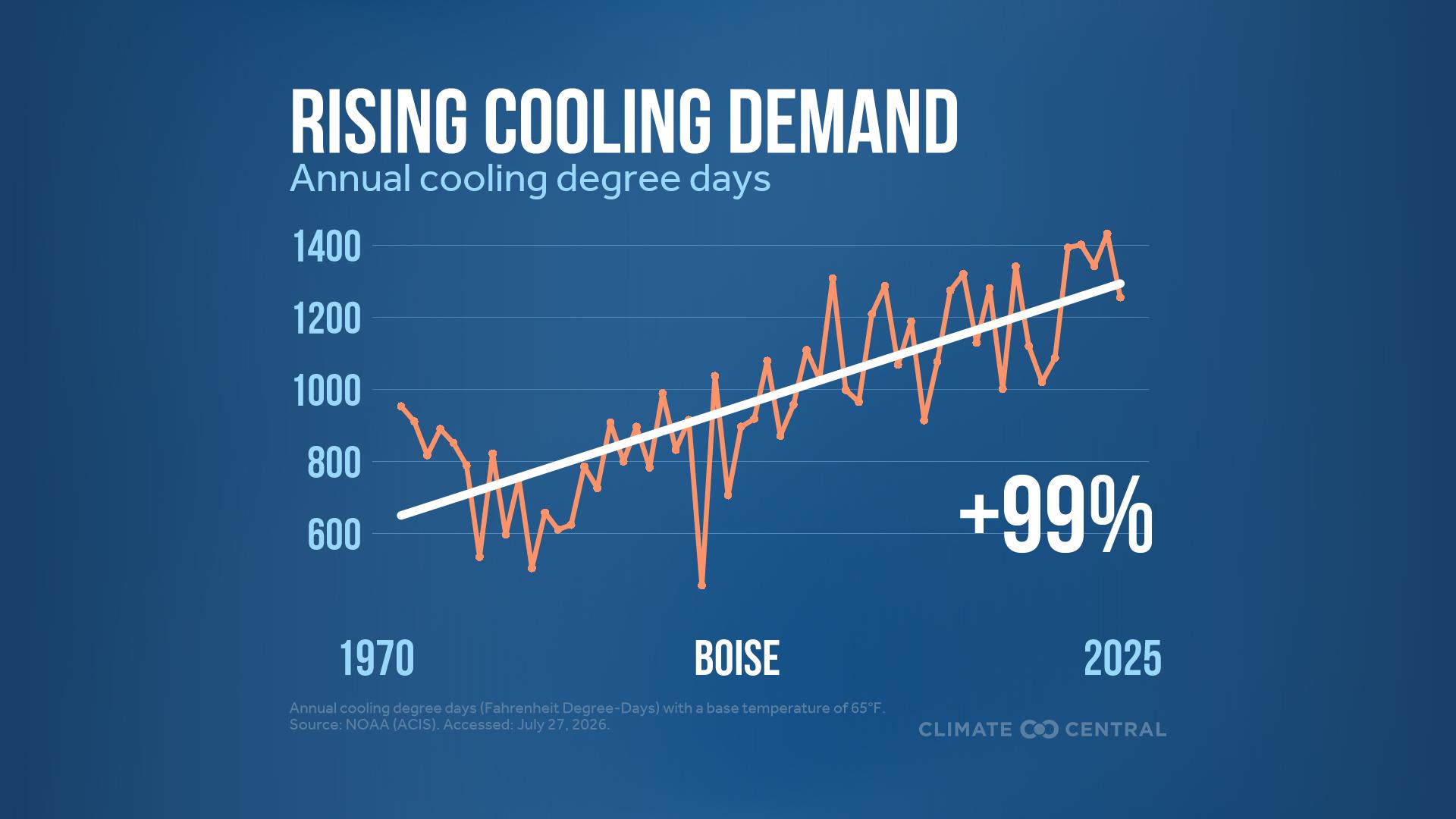
See the graph titled “Rising Cooling Demand” from Climate Central, [August 5, 2026].] Over the past 55 years the demand for “cooling” has almost doubled [99%] putting a strain on power companies’ ability to meet the demand.
This is where the VPP can help. Extra power generated by the home and stored in the batteries there, can be sent into the grid as needed, and … all with the homeowner’s permission. The homeowner will be paid for that power, and the power company, with a much simpler application, does not have to build a new power plant or a new/additional transmission line.
It becomes a completely different asset and this VPP with tens of thousands of devices and with tens of thousands of people can help meet demand at end of day, during heat waves and other times when grid demand is very high.
Finally, we must recognize that we, globally, must move away from fossil fuels. The tragedy of an icefall, massive river discharge and flooding has cost well over 1,300 lives in Tibet and Nepal and many more are still missing. The photos of the devastation there are beyond comprehension. While data are still being collected, and it cannot be stated unequivocally that climate change caused this event, data suggest it played a role.
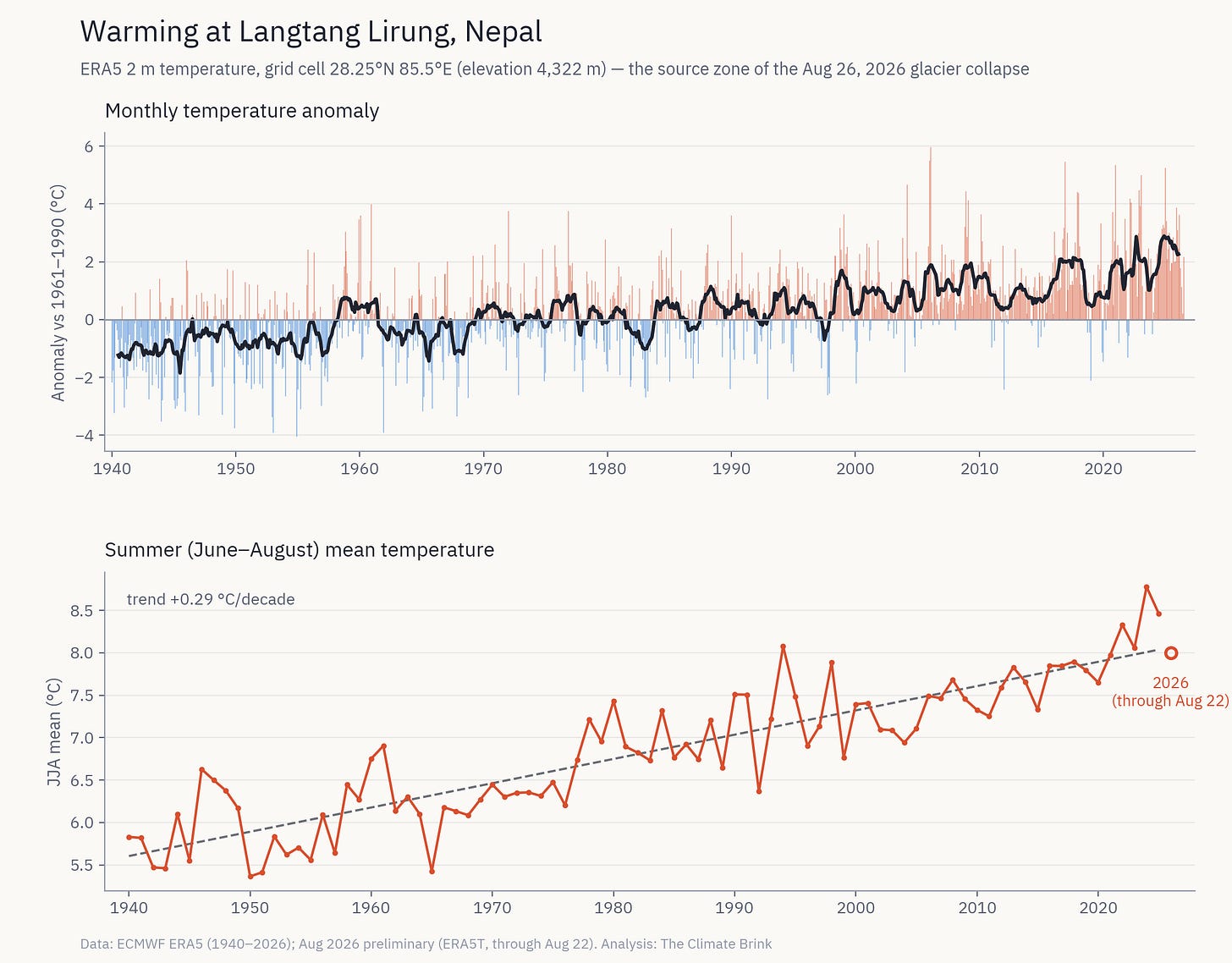
Let us look at data showing warming in Langtang Lirung, Nepal over the past 85 years in the area where the flood took place. See the two graphs here with the first showing the long-term monthly temperature anomaly [increase].
The second graph over the same period shows the summer mean temperature increase of about 2.5 degrees Centigrade or 4.5 degrees Fahrenheit. Geologists, glaciologists, climate scientists, weather experts, and more are attempting to find and understand the root cause of this event in this remote region, but warming temperatures appear to have played a role.
Facts of Interest
*** European Union [EU] deploys 33.8 GW [gigawatts] of solar in first half of 2026. Solar Power Europe expects that the EU will add a total of 68.1 GW in 2026. [PV Magazine 9/8/26]. Note: One GW equals one billion watts; enough to power about 750,000 homes.
*** Kew Gardens, London, UK has had a weather station since 1871. This July was, based on third party analysis of Met Office data collected at the site, the first calendar month on record [more than 150 years] where no rainfall was measured at Kew. [LONDON CENTRIC AUG 3,2026. Jim Waterson and Polly Smythe].
***The U.S. energy storage [batteries] industry installed a record 20.2 gigawatt-hours of new capacity in” second quarter 2026. Electric grid operators turn to storage to strengthen reliability and meet rising electricity demand. [U.S. Energy Storage Market Outlook, cleantechnica.com/2026/09/01].
***One whale species is taking a big hit from the changing climate: specifically, the gray whales on the west coast. Warmer Arctic waters have changed the location and quantity of the amphipods they used to feast on. The population has dropped about 50%, from 27,000 in 2016 to 13,000 today. Many of the dead whales are emaciated and show signs of starvation. [Science, 16 July 2026].
*** China leads research in 90% of crucial technologies. [Nature, Vol 649, 1 January 2026].
And, so it goes.
The scientific career of Raymond N. Johnson, Ph.D., spanned 30 years in research and development as an organic/analytical chemist. He is currently founder and director of the Institute of Climate Studies USA (www.ICSUSA.org). Climate Science is published monthly.
Sources
- PVTech, 3 September 2026
- American Clean Power Association, 3 September 2026
- Climate Central, 5 August 2026
- PV Magazine, 8 September 2026
- LONDON CENTRIC, 3 August 2026 — Jim Waterson and Polly Smythe
- cleantechnica.com, 1 September 2026: REPORT: U.S. Adds 20 GWh of Energy Storage Capacity in Q2, Largest Quarter on Record
- Science, 16 July 2026: As the Arctic warms, gray whale boom turns into a bust
- Nature, 1 January 2026 (Vol 649): China leads research in 90% of crucial technologies — a dramatic shift this century
- Wood Mackenzie
Images: Spencer Platt via Getty Images; ev.energy.